Turning Notes into Living Maps

Join us as we explore From Notes to Knowledge Graphs: Visual PKM Systems, moving beyond scattered snippets toward living, visual maps that reveal patterns, accelerate recall, and spark synthesis. Expect practical workflows, research-backed guidance, candid stories, and tool comparisons to help you build a resilient thinking environment. Share your favorite visual cues, ask questions, and subscribe to follow experiments that transform wandering notes into navigable knowledge.

Why Visual Thinking Supercharges Memory

{{SECTION_SUBTITLE}}
From Bullets to Networks

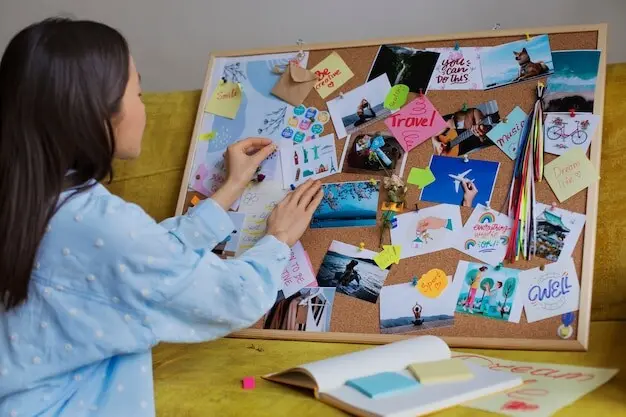
Shifting from linear bullet lists to interconnected nodes reframes thinking from sequence to structure. Ideas stop waiting their turn and start conversing. Links capture rationale, contrasts, and consequences, while visual clusters reveal missing bridges. The result is momentum: clearer arguments, faster drafts, and more confident decisions.

The Science of Connection

Associative memory strengthens when concepts co-activate across contexts. Hebbian principles reward repeated co-occurrence; spaced reviews deepen cues; varied modalities widen access routes. By encoding relationships explicitly with edges and annotations, you build durable, redundant retrieval paths that perform under pressure, whether presenting, writing, or solving unfamiliar problems.

Building a Durable Note: Atoms, Links, and Context

{{SECTION_SUBTITLE}}

Atomic Clarity

Write each note so it can live outside its original context without confusion. Prefer statements over excerpts, cite the source explicitly, and record why it matters. Future you will thank present you when recombining ideas quickly, unblocked by missing definitions, ambiguous pronouns, or forgotten assumptions.

Backlinks and Mentions

Mark where ideas are used, not only where they originate. Backlinks, mentions, and block references create bidirectional trails that answer how, where, and why something connects. This context transforms passive storage into an active conversation, highlighting leverage points that deserve expansion, consolidation, or scheduled review.

From Backlinks to Knowledge Graphs

As links accumulate, structures emerge: nodes, edges, and typed relationships that explain how ideas influence one another. Visualizing this fabric exposes hubs, bridges, and gaps. By naming entities consistently and distinguishing evidence from opinions, you create a navigable map that scales across projects, collaborators, and time.

Nodes, Edges, and Semantics

Treat notes as entities and links as claims. Annotate edge types—supports, contradicts, relates, inspired-by—so queries can reason, not just retrieve. Even minimal semantics reveal argumentative structure, expose circular references, and highlight under-evidenced assertions that deserve experiments, literature searches, or interviews with domain experts.

Gardening Emergent Structure

Schedule gentle pruning sessions to merge duplicates, split overloaded notes, and rephrase fuzzy ideas. Promote recurring patterns into reusable templates or properties. As clusters stabilize, draft short summaries that explain why the cluster matters, where it leads, and which unanswered questions could unlock the next breakthrough.

Tools That Map Your Mind
Different tools emphasize different strengths. Obsidian offers local-first Markdown with plugins and canvases; Logseq and Roam prioritize block references and outliner thinking; Tana experiments with fields; graph databases unlock advanced analytics. We will discuss portability, privacy, and workflows so you can choose confidently and mix pragmatically.

Workflows: From Capture to Insight

A reliable system is more habit than hardware. Design short loops: capture quickly, process daily, connect deliberately, review cyclically, and publish or share when value appears. Frictionless micro-steps compound into trust. The smoother the loop, the more your graph returns clarity during chaotic, high-pressure weeks.

Visual Patterns and Network Literacy

Graphs communicate with shape as much as content. Dense clusters suggest specialties; long chains hint processes; isolated islands reveal neglected bets. Learning to read hubs, bridges, and cycles helps prioritize attention. With basic centrality ideas, you can decide where to prune, learn, or invest next deliberately.

Spotting Bridges and Bottlenecks

Bridge nodes connect distant clusters and often hide career-defining opportunities. Bottlenecks constrain flow and create fragility. Track pages or entities that attract diverse references but lack summaries. Add context, examples, or playbooks there to multiply impact and reduce single points of failure throughout your thinking system.

Communities and Concept Islands

Community detection surfaces natural neighborhoods that deserve names, glossaries, or dedicated dashboards. Conversely, lonely islands may hide blind spots or early intuitions awaiting evidence. Decide intentionally: connect, research, or archive. By curating these shapes, you keep exploration honest while guiding projects toward outcomes stakeholders can understand.

Biases in the Map

Every tool and habit bends perception. Easy-to-link ideas inflate; hard-to-name ideas shrink. Recency bias brightens today’s paths while older insights fade. Counteract with periodic audits, cross-medium reviews, and deliberate contrarian searches that restore balance and preserve diversity across fields, voices, and methodological approaches you value.

Small Daily Moves

Choose rituals you can keep on your worst day: two links, one summary, five minutes of pruning. Celebrate consistency over intensity. These modest motions shield against backlog shame, nurture accuracy, and ensure your knowledge graph remains a living companion rather than an aspirational monument.

Respecting Sources and People

Citations are relationships too. Track original authors, license terms, and the context in which ideas were shared. Ask permission before storing sensitive correspondence. When insights drive decisions, reflect their lineage. Good stewardship builds trust, invites collaboration, and makes future publishing or compliance requests painless rather than panicked.

Human-AI Collaboration

Language models can accelerate capture and refactoring, but they amplify whatever structure you provide. Pair AI summaries with citations, keep raw sources, and double-check edges for hallucinations. Treat models like interns: useful, fast, and fallible. The clearer your ontology, the safer and more productive the assistance.

Tarizentopaloteliteminovi
Privacy Overview

This website uses cookies so that we can provide you with the best user experience possible. Cookie information is stored in your browser and performs functions such as recognising you when you return to our website and helping our team to understand which sections of the website you find most interesting and useful.